Gemini 4 Argon: AI Model for Coding & Security
AI, Frontier Models, Enterprise Automation, Quant Finance, Cybersecurity
Gemini 4 Argon: Google’s New Frontier AI Model for Coding, Enterprise & Cybersecurity
As a quantitative trader and financial analyst working across Asia’s markets, I see Google’s new Gemini 4 Argon model not just as another AI release, but as a structural shift in how we will build trading systems, automate enterprise workflows, and defend critical infrastructure. For innovation ecosystems like Network Hub Asia, Argon signals the next phase of AI-native businesses and cross-border collaboration.
1. What Google Announced: A Frontier Model Built for Long Horizons
On 30 September 2026, Google announced Gemini 4 Argon as its latest frontier-level AI model, designed explicitly for deep reasoning across software engineering, enterprise knowledge work, and cybersecurity. In Google’s own words, Argon is built for “high-stakes, long-form workflows,” with early access provided through the Fairwind Program to trusted cybersecurity partners and internal Google teams (blog.google).
Public availability will follow in phases, initially for paid API customers and Google AI Ultra subscribers, with no fixed date yet. This cautious, security-first rollout is consistent with Argon’s positioning as a model for critical infrastructure, not just consumer chat applications.
2. Long-Horizon Reasoning and Complex Workflows: Why Traders Should Care
The defining characteristic of Gemini 4 Argon is its focus on long-horizon reasoning and complex, multi-step workflows. Unlike earlier models that excelled at short prompts and local reasoning, Argon is engineered to stay coherent over extended sequences of decisions, documents, and code changes. For systematic investors, this aligns closely with how we actually work: multi-day research pipelines, portfolio construction, risk checks, compliance reviews, and deployment steps all chained together.
On benchmarks like DeepSWE v1.1, which simulates long-horizon software engineering tasks, Argon scores 77.9%, beating leading competitors such as GPT‑6 Astra and Anthropic Claude Opus (blog.google). That matters because DeepSWE is not about one-off answers; it is about sustained progress on a complex codebase—very similar to iterating on a trading stack or risk engine over weeks.
📌 Key Takeaway: Argon is optimized not for party tricks, but for the kind of long, messy workflows that dominate real-world finance, legal, and cybersecurity operations.
3. The 1 Million-Token Output Limit: Structural Shift for Large-Scale Tasks
Argon’s most eye-catching specification is its 1,000,000-token maximum output length, a huge jump from the 64,000-token ceiling in previous Gemini models (blog.google). This does not simply mean “longer answers”; it enables entire projects to be generated, refactored, or reviewed in a single run:
Full multi-module trading systems (data ingestion, feature engineering, backtesting, execution adapters, monitoring dashboards) described, scaffolded, and documented end-to-end.
Long-form research reports combining code, charts, and narrative for cross-asset factor studies or stress-testing scenarios across decades of data.
Complex regulatory and compliance workflows where model outputs must reference multiple statutes, internal policies, and transaction logs.
For software engineering and research, this capacity reduces the need for brittle “chunking” strategies, where we split codebases or documents into fragments and hope the model can stitch them back together. Instead, Argon can maintain a coherent narrative and design across the full output, which is critical when you are generating or refactoring risk-sensitive systems such as order management or margin engines.
4. How Google Uses Argon Internally: Quantum Optimization and Memory Savings
Google is already dogfooding Gemini 4 Argon at scale. According to the official announcement, Argon has been used to:
Optimize quantum algorithms, achieving a 40% performance improvement over baseline approaches in minutes, not days (blog.google).
Autonomously identify memory inefficiencies across data centers, freeing around 300 TiB of memory with projected total savings between 500 TiB and 1 PiB.
Drive large-scale code migrations from C/C++ to Rust, including replacing thousands of lines of SIMD code and delivering up to 2.7× speed-ups in video decoding libraries such as libgav1.
For financial institutions and exchanges in Asia, these internal case studies are a strong signal: Argon is not just a conversational model; it is a systems engineer capable of optimizing infrastructure and codebases at scale. In trading terms, this is like having a tireless quant who continuously reduces latency, memory footprint, and operational risk across your entire stack.
5. Capabilities Across Software Engineering, Cybersecurity, and Professional Workflows
5.1 Software Engineering and Quant Infrastructure
On the engineering side, Argon’s benchmark results are particularly relevant to quant teams:
DeepSWE v1.1: 77.9% (state of the art), focused on long-horizon coding tasks (gemini4argon.com).
Vibe Code Bench: 91.9%, among the top scores for code understanding and generation (vals.ai).
In practice, this means Argon can:
Generate and refactor backtesting frameworks that support multiple asset classes and regions (e.g., equities in Japan, FX in Singapore, crypto in Dubai).
Assist in migrating legacy C++ risk engines to safer languages while preserving numerical stability and performance.
Maintain documentation and testing suites that stay synchronized with rapidly evolving quantitative libraries.
5.2 Cybersecurity: Defense for High-Value Targets
Gemini 4 Argon has been explicitly trained for cyber defense. Google reports that it can autonomously find, validate, and patch vulnerabilities, and that in collaboration with Wiz’s “Scan for Good” initiative it identified a critical healthcare software vulnerability missed by earlier models (blog.google).
On CWE-bench v1, a benchmark focused on security vulnerability remediation, Argon scores 68%, tying for first place. For exchanges, brokerages, and digital asset platforms, this opens a path to AI-augmented security operations centers where Argon continuously scans infrastructure-as-code, microservices, and configuration files for exploitable weaknesses before attackers do.
5.3 Enterprise Knowledge Work: Finance, Legal, and Tax
Argon also leads on the Vals Index, an independent composite benchmark spanning finance, coding, legal, and tax tasks weighted by their GDP contribution. It ranks first with a score of 68.9%, and tops the Vals Finance Agent v2 benchmark for complex financial research (vals.ai).
For professional workflows, this translates into:
Drafting and validating cross-border derivatives documentation, reconciling ISDA terms with local regulations in Singapore, Hong Kong, or Dubai.
Automating tax-sensitive portfolio rebalancing while referencing jurisdiction-specific rules and investor mandates.
Producing investment committee packs that integrate quantitative results, scenario analysis, and regulatory commentary into a single, coherent document.
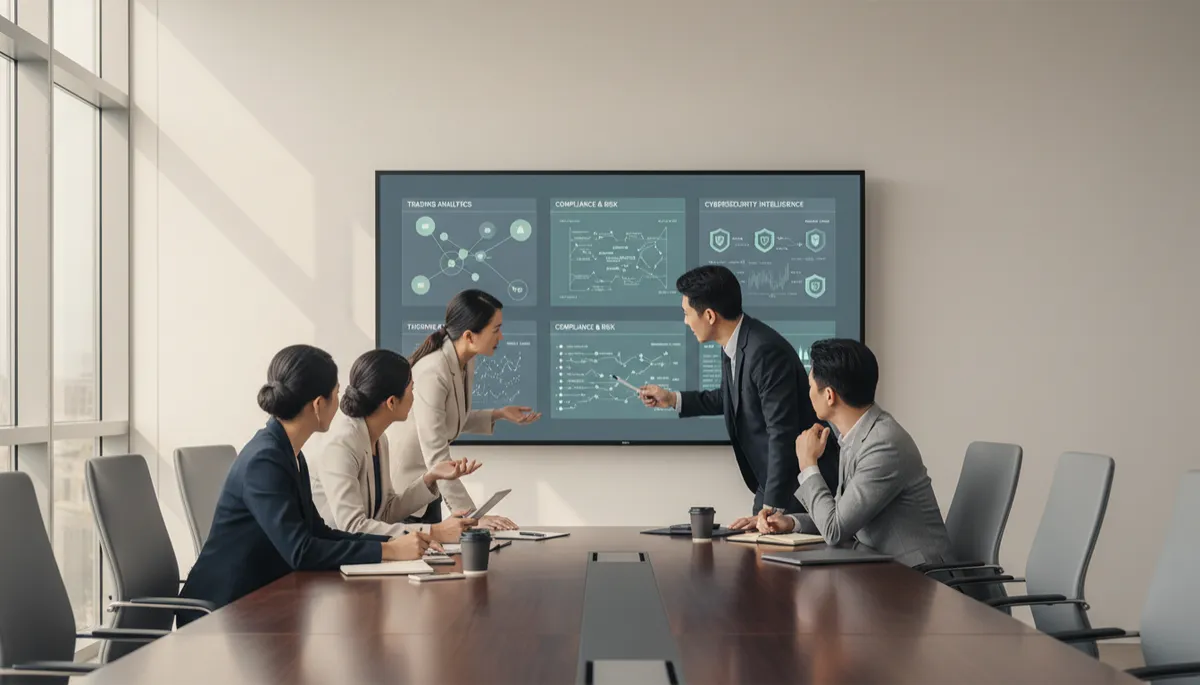
Frontier AI models are becoming central to strategy, risk, and execution in modern markets.
6. Safety Measures and Phased Rollout: Frontier Safety in Practice
Given its power, Argon is being deployed under Google’s Frontier Safety Framework. According to the official blog, the model is designed to refuse harmful or dual-use requests—for example, those related to chemical, biological, radiological, and nuclear (CBRN) threats—while still supporting legitimate scientific uses (blog.google).
Prompt injection defense: Argon is described as Google’s most robust model yet against indirect prompt injection, validated via adversarial testing on the Gray Swan IPI benchmark.
Misalignment monitoring: The model’s chain-of-thought is actively monitored; execution can be halted automatically if signs of misalignment emerge.
Secure sandboxing: High-risk tests are run in sealed, isolated environments, and Google plans to share these best practices with the wider ecosystem.
The phased rollout—first to internal teams and a small set of cybersecurity partners via Fairwind, then later to API customers—reflects a deliberate attempt to balance innovation with systemic risk management. For regulated financial institutions, this cautious approach is a positive signal: the vendor understands that frontier models must be treated like critical infrastructure, not consumer apps.
7. Performance Benchmarks: Where Argon Leads and Where It Lags
Across 19 benchmarks reported by Google and third-party aggregators, Gemini 4 Argon:
Ranks first in 13 benchmarks, ties in 1, and trails in 5 (gemini4argon.com).
Benchmark | Argon Score | Position vs Peers |
|---|---|---|
DeepSWE v1.1 (coding) | 77.9% | 1st |
AutomationBench (workflows) | 51.3% | 1st |
LVBench (long video) | 91.7% | State of the art |
CWE-bench v1 (security) | 68% | Tied 1st |
Vals Index (enterprise) | 68.9% | 1st of 41 models |
However, Argon is not universally dominant. On FrontierSWE v2 (55.0%) and Terminal‑Bench 4.0 (57.4%), it trails behind GPT‑6 Astra and Claude Opus, respectively (canberk.me). These gaps suggest that terminal-style agent tasks and certain scientific workloads remain challenging, and that model selection will still be domain-specific.
💡 Pro Tip for Quant Teams: Use Argon where long-horizon reasoning, code quality, and enterprise context matter most (research, infrastructure, compliance). For highly interactive terminal agents, keep benchmarking alternatives alongside Argon.
8. Enterprise Automation and Trading Workflows: Concrete Strategy Examples
8.1 Argon as an Automation Engine (AutomationBench Leader)
On AutomationBench, Zapier’s benchmark for end-to-end business process automation, Argon scores 51.3%, the highest among evaluated models (creuto.com). This is particularly relevant for trading and risk operations, where workflows can be decomposed into structured steps. Consider the following Argon-enabled workflow for an Asia-focused systematic strategy:
Signal generation: Ingest overnight macro data, volatility surfaces, and cross-asset flows. Argon summarizes key shifts and proposes candidate factors (e.g., carry, momentum, volatility risk premia).
Backtest design: Argon writes backtest code in Python or Rust, including transaction cost models suited to specific Asian venues (e.g., T+2 settlement, lot sizes, stamp duties).
Risk and compliance: The model checks position limits, concentration thresholds, and regulatory constraints (e.g., short-selling rules in South Korea or uptick rules in certain markets).
Execution playbook: Argon generates execution algorithms (VWAP, POV, liquidity-seeking) and recommends venue routing across Tokyo, Singapore, and Hong Kong, given current liquidity conditions.
8.2 Example Strategy with Entry/Exit Criteria
As a concrete illustration, imagine a cross-asset volatility carry strategy deployed across Asia-Pacific futures, where Argon supports research, monitoring, and risk management:
Universe: Equity index futures (Nikkei 225, HSCEI, NIFTY), FX options (USD/JPY, USD/SGD), and interest rate futures (SGX 10Y, JGBs).
Signal: Implied volatility minus realized volatility over the last 30 trading days, adjusted for term structure and skew (Argon helps compute and sanity-check these metrics across instruments).
Entry criteria: Go short volatility (via options or variance swaps) when: (i) implied – realized > 1.5 standard deviations above its 1-year mean, and (ii) Argon’s macro narrative analysis flags no imminent event risk (e.g., central bank decisions, elections) that historically coincides with volatility spikes.
Exit criteria: Close the position when: (i) the spread normalizes to within 0.5 standard deviations of its mean, (ii) realized volatility exceeds implied for 5 consecutive days, or (iii) Argon’s risk monitor flags structural regime change (e.g., policy shift, geopolitical escalation) based on news and macro data feeds.
Argon’s role here is not to “decide trades” autonomously but to industrialize the research and monitoring layer: calculating metrics, generating code, summarizing global narratives, and continuously testing the robustness of the strategy under new information.
9. Pricing, Cost-Efficiency, and Enterprise Adoption
Google has announced introductory pricing for Argon at $2 per 1 million input tokens and $10 per 1 million output tokens, with cached inputs discounted by 95% (blog.google). Post-introductory rates are expected to rise to $4 (input) and $20 (output) per million tokens (vals.ai).
For an institutional desk, the cost of a 200,000-token research run is trivial compared to the value of faster discovery and reduced operational risk. The more interesting question is governance: how to integrate Argon into model risk frameworks, audit trails, and data residency policies across Asian jurisdictions. This is precisely where an ecosystem connector like Network Hub Asia can add value—sharing implementation patterns, vendor assessments, and compliance blueprints across markets.
10. Asia-Specific Impacts: Developers, Startups, and Financial Institutions
10.1 Developers and Startups
For developers and startups across Asia—from Bangalore and Ho Chi Minh City to Riyadh and Dubai—Gemini 4 Argon changes the feasible scope of a small team. With a 1M-token output limit and strong coding benchmarks, a lean founding team can:
Build AI-native SaaS platforms that automate compliance, reporting, or risk analysis for SMEs across multiple jurisdictions, with Argon handling complex workflows and document reasoning.
Offer managed cybersecurity services where Argon continuously scans client infrastructure and provides prioritized remediation guidance.
Platforms like Network Hub Asia can act as the network layer connecting these AI-native startups with investors, enterprises, and regulators, accelerating the diffusion of best practices and cross-border partnerships.
10.2 Financial Institutions and Market Infrastructure
For banks, asset managers, and exchanges in Asia and the Gulf, Argon’s capabilities align with three pressing agendas:
Enterprise automation: McKinsey and others have highlighted AI as a key driver of enterprise automation and operational efficiency. Argon’s leadership on AutomationBench suggests it can orchestrate complex middle- and back-office workflows, from KYC/AML checks to collateral management (McKinsey).
Risk and cybersecurity: With rising cyber threats targeting exchanges and digital asset platforms, Argon’s security benchmarks and autonomous remediation abilities make it a natural co-pilot for security operations centers.
Regional integration: As Asia’s capital markets become more interconnected, institutions will need cross-jurisdictional analytics and documentation. Argon’s strength in legal, finance, and tax reasoning positions it well to support regional integration initiatives.
11. Broader AI Industry Trends: Frontier Models as Infrastructure
Gemini 4 Argon crystallizes several broader trends in the AI industry:
From chatbots to infrastructure: Frontier models are evolving into general-purpose infrastructure for reasoning, automation, and security—similar to how cloud computing evolved from simple storage to full-stack platforms.
Safety and governance as differentiators: Google’s Frontier Safety Framework, misalignment monitoring, and sandboxing highlight that governance is now a core product feature, not an afterthought.
Benchmark specialization: No model dominates every domain. Argon’s strengths in long-horizon coding, enterprise work, and cybersecurity suggest a future where organizations orchestrate portfolios of models, choosing the best tool for each task.
12. Looking Ahead: The Future of Frontier AI Models
From a quantitative trading and financial analysis perspective, Gemini 4 Argon marks a transition point. With 1M-token outputs, strong long-horizon reasoning, and proven internal use at Google for quantum optimization and massive memory savings, frontier models are moving from assistants to co-architects of our systems and workflows. The next generation of models will likely push further in three directions:
Tighter integration with tools and data: Deeper coupling with trading systems, risk engines, and cybersecurity platforms, with robust audit trails and explainability.
Stronger safety and regulatory alignment: Models that can reason explicitly about regulations, internal policies, and governance constraints—especially important across Asia’s heterogeneous regulatory landscape.
Regional specialization: Frontier models tuned for local languages, legal frameworks, and market microstructures, enabling AI-native products tailored to Asia and the Gulf.
For innovation ecosystems like Network Hub Asia, the opportunity is to become the connective tissue that helps entrepreneurs, enterprises, and investors deploy these frontier capabilities responsibly and collaboratively. The firms that win in this new landscape will not simply “use AI”; they will co-design their business models, trading strategies, and security architectures with frontier models like Gemini 4 Argon at the core.
Frontier AI is becoming the network layer of the global economy. If you are building in or into Asia, this is the moment to position your organization on that network. Join the waiting list to be among the first to access Network Hub Asia when it launches, and connect with the entrepreneurs, institutions, and technologies that will define the next decade of AI-native finance and innovation.